Key takeaways
- Quartz is engineered, non-porous and consistent in color.
- Granite is natural, heat resistant and one of a kind.
- Both are durable when installed well.
- Choose by look, care preferences and how you cook.
Quartz
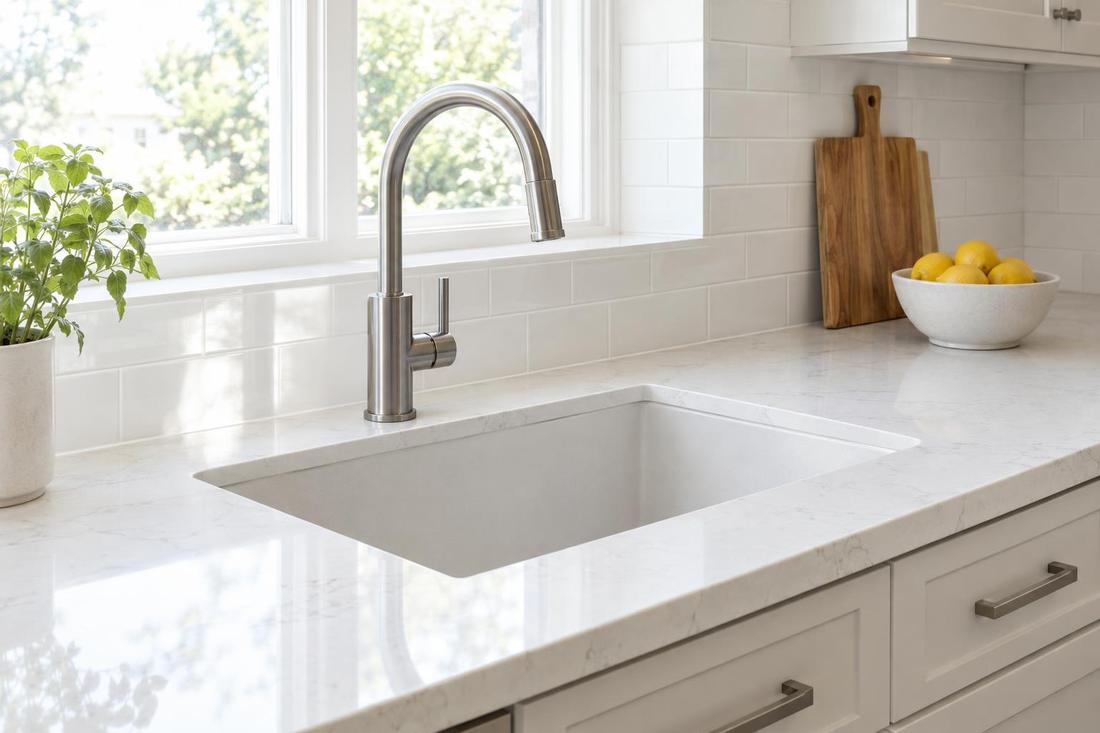
Quartz counters are made from crushed stone and resin. They are non-porous, so they resist stains and do not need sealing, and the pattern is consistent from slab to slab. Heat can damage the resin, so use trivets.
Quartz suits busy households that want low maintenance.
Granite
Granite is natural stone with unique patterns. It handles heat well and is very hard, but it is porous and benefits from periodic sealing. Each slab is different, so choosing in person is wise.
Granite suits cooks who love natural character.
Other stone options
Marble offers classic veining but etches and stains more easily. Quartzite is a hard natural stone that looks like marble. Soapstone is soft, develops a patina and resists stains.
Ask for samples and test them at home.
Making the choice
Look at large samples in your own light, think about how you cook and clean and decide how much care you are happy to give. Ask about seams, edges and overhang support. A good fabricator makes either material look great.
Visit a stone yard if you can.
Official sources and further reading
These are independent organizations. Links open in a new tab.
Quick answers
Which is more durable?
Both are durable. Quartz resists stains, and granite resists heat.
Does granite need sealing?
Most granite benefits from periodic sealing. Ask your supplier.