Key takeaways
- Pick appliances early because their sizes drive the cabinet plan.
- Check power, gas, water and ventilation needs before ordering.
- Built-in and panel-ready options need precise planning.
- Consider how you cook, not only how the appliance looks.
Start with how you cook
Think about how often you bake, how many people you cook for and what you use daily. A serious cook may want a larger range and a stronger hood, while a small household may prefer a compact setup. Choose features you will actually use.
Visit showrooms to see and touch the controls.
Check the details
Every appliance has required clearances, opening sizes, power or gas needs and venting. Confirm them before cabinets are built. Keep the manuals and dimensional drawings with your plans.
Ask about door swings and handle projections.
Built-in and panel-ready
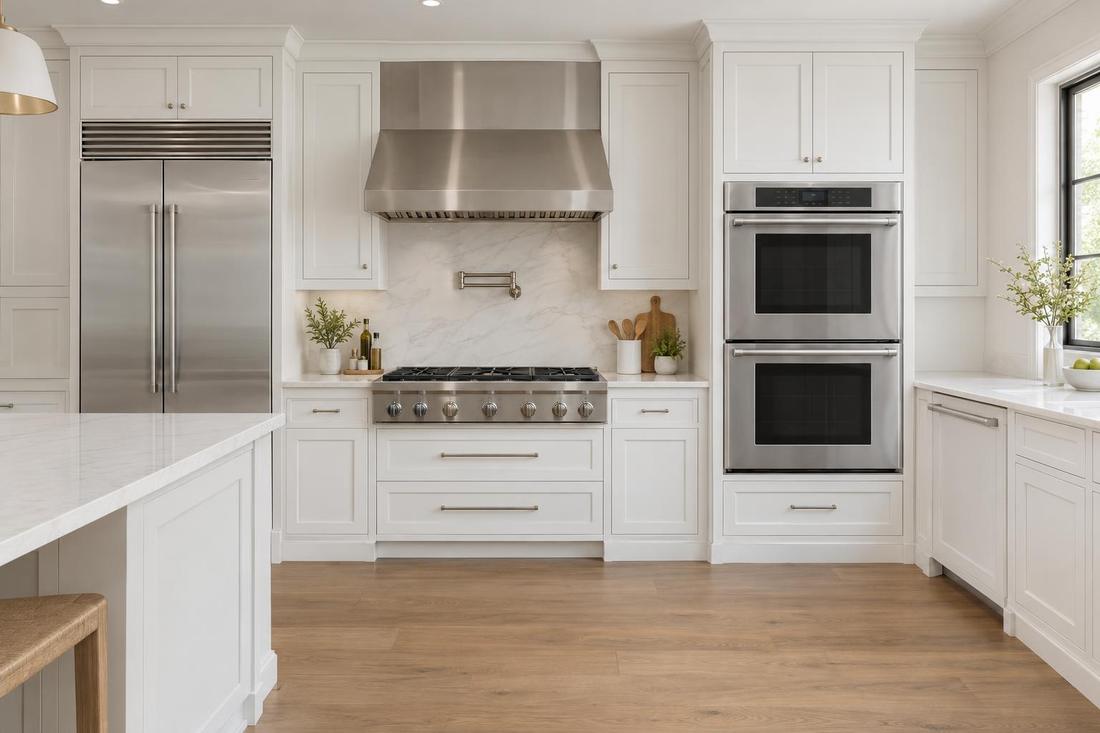
Built-in refrigerators and panel-ready dishwashers look seamless but need accurate cabinet openings and trim. Lead times can be long, so order early.
Plan service access for built-ins.
Ventilation and safety
Gas ranges and powerful cooktops need good ventilation and safe clearances. Follow manufacturer instructions and local codes, and use qualified trades for gas and electrical work. The U.S. Consumer Product Safety Commission publishes appliance safety information.
Test everything before the final payment.
Official sources and further reading
- U.S. Consumer Product Safety Commission
- National Kitchen & Bath Association
- U.S. Department of Energy: Energy Saver
These are independent organizations. Links open in a new tab.
Quick answers
Should I buy appliances before cabinets?
It helps, because exact sizes drive the plan.
Can I reuse my old appliances?
Yes, if they fit the design and work well.