Key takeaways
- Use three layers: ambient, task and accent.
- Put task lights where you work, especially under cabinets.
- Choose warm white light and dimmable controls.
- Plan wiring before the walls are closed.
Ambient light
Ambient light fills the room with even, comfortable light. Recessed lights spaced across the ceiling are common, and semi-flush fixtures work in older homes. Use dimmers so you can adjust the mood and brightness.
Avoid placing recessed lights where they cast shadows on your work.
Task light
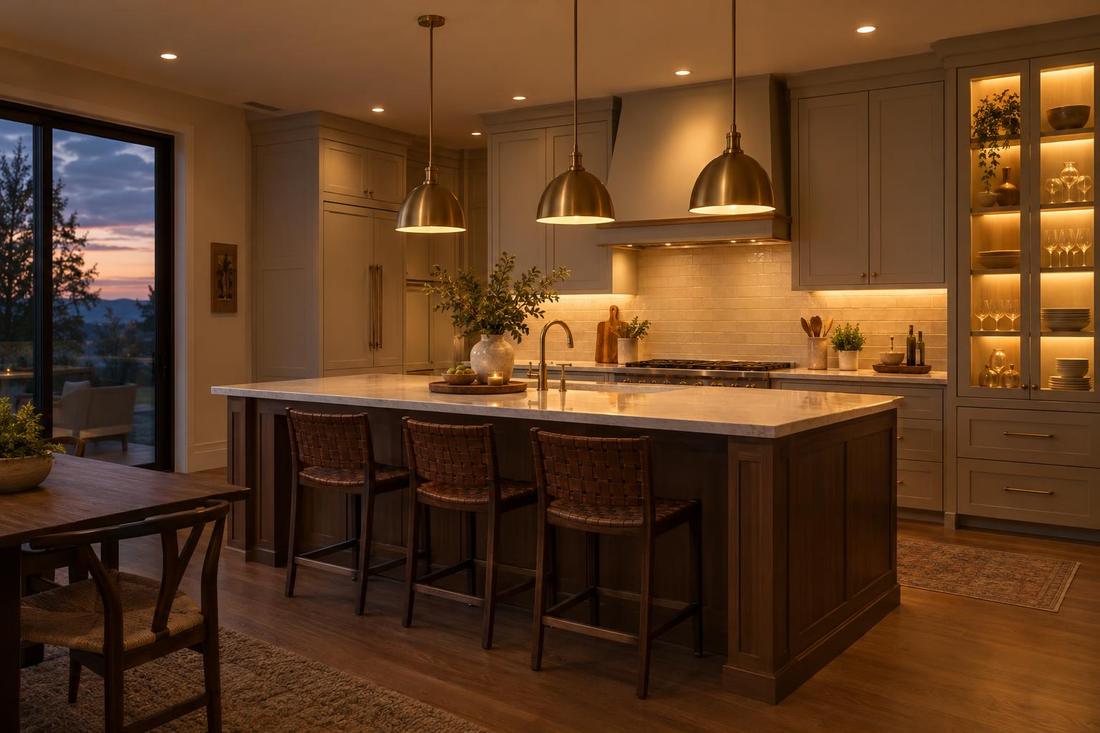
Task light shines on counters, the sink and the range. Under-cabinet strips remove shadows, and pendants over islands add light and style. Choose fixtures that are bright and glare-free.
Aim lights at the work area, not at your eyes.
Accent and decorative light
Accent lights highlight glass cabinets, open shelves and toe kicks. Decorative pendants and sconces add personality. Keep colors and finishes consistent so the room feels unified.
Pendant height matters for sight lines and comfort.
Color, controls and planning
Warm white light is flattering in most kitchens, while cool white can look harsh. Match the color temperature of all fixtures and use dimmers. Plan outlets, switches and wiring early so everything is in the walls before drywall.
Ask your electrician about LED drivers and dimmer compatibility.
Official sources and further reading
- U.S. Department of Energy: Energy Saver
- National Kitchen & Bath Association
- National Association of Home Builders
These are independent organizations. Links open in a new tab.
Quick answers
How many recessed lights do I need?
It depends on room size and ceiling height. A lighting plan will tell you.
What color temperature should I choose?
Warm white suits most kitchens. Test a sample before committing.